

The Race Against Transparency: Massachusetts POST Commission Files and Litigious Redirection

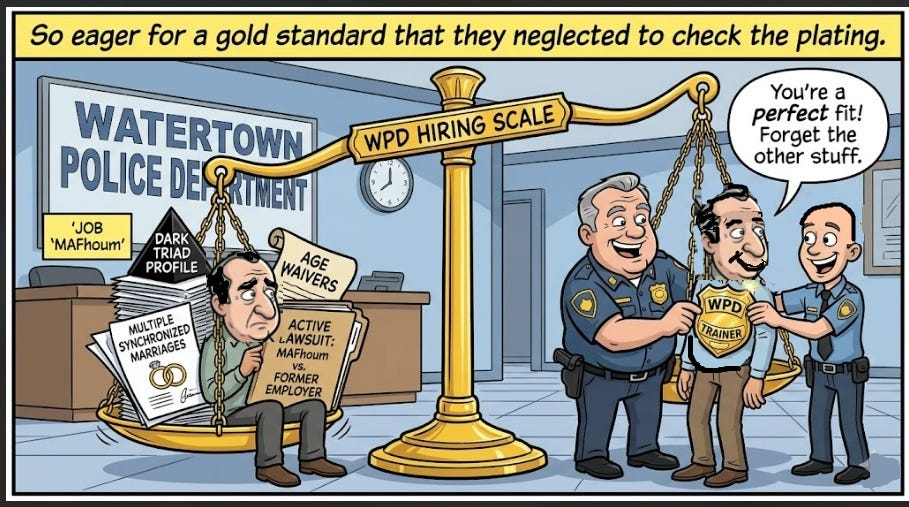
In this episode, we dive into Chapter 7 of Watertown: Under Color of Law, titled “Vetting Failures.” This chapter exposes a critical breakdown in municipal oversight and the hiring processes of local law enforcement. We examine how an individual’s documented history of misconduct—a “scarlet letter” that would typically serve as a permanent disqualifier in high-stakes law enforcement—was minimized or outright ignored during the Watertown vetting process.
Key Themes & Discussion Points
The “Scarlet Letter” Disconnect
In law enforcement, credibility is the primary currency required to successfully navigate and testify within the court system.
We analyze why internal findings of misconduct or a history of deception are traditionally viewed as administrative dealbreakers, and contrast that standard with how the system handled this specific hiring process.
The Anatomy of a Fudged Narrative
How municipal departments build administrative monuments dedicated to “how not to do it”.
Instead of implementing deep vetting to protect the community, the bureaucratic machinery often shifts its energy toward protecting a manufactured narrative and minimizing red flags.
The Legal Currency of Truth
An exploration of how background checks, official transcripts, and internal files are supposed to serve as a gatekeeping mechanism, and what happens to public trust when those mechanisms fail.
Quotes Featured in This Episode
“In the high-stakes environment of law enforcement, where credibility is the primary currency of the court system, such a finding is typically viewed as a permanent disqualifier. Yet, in the context of the Watertown hiring process, this ‘scarlet letter’ appeared to have been treated as a negligible...”
Book Club & Discussion Questions
The High Bar vs. Low Reality: Credibility is legally required for an officer to give viable testimony in court. Why do you think a municipal hiring process would treat a documented history of misconduct as a negligible issue rather than a disqualifier?
Systemic Protection: When an institution encounters clear evidence of a candidate’s past deceptions, is the failure to act driven by a lack of resources, or does it reveal a deliberate effort to preserve a preferred narrative?
The Impact on Public Trust: How does a failure in the vetting process at the municipal level ripple out to affect the broader integrity of the local justice system?
Resource Links & References
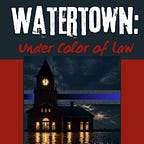
Featured Book: Watertown: Under Color of Law by Amy M. Dubé (2026, Red Oak Media).
Related Chapters: Chapter 6 (”Marital Bliss”) and Chapter 8 (”Institutional Machinery”)


