

Watertown Captain Daniel Unsworth Violates Whistleblower’s Civil Right to Petition the Government
In this episode, we dissect the jaw-dropping procedural gridlock of Chapter 16 from Watertown: Under Color of Law, titled “Discrepancies.” This chapter exposes the legal gymnastics that unfolded when the system was forced to handle an out-of-state residency reality colliding with a local emergency petition. We trace a deliberate path of judicial venue-shopping, look at the logical fractures inside a sworn affidavit, and watch a high-ranking commander cross state lines to act as a shadow magistrate for a subordinate officer.
Key Themes & Discussion Points
The Fictional West Roxbury Map
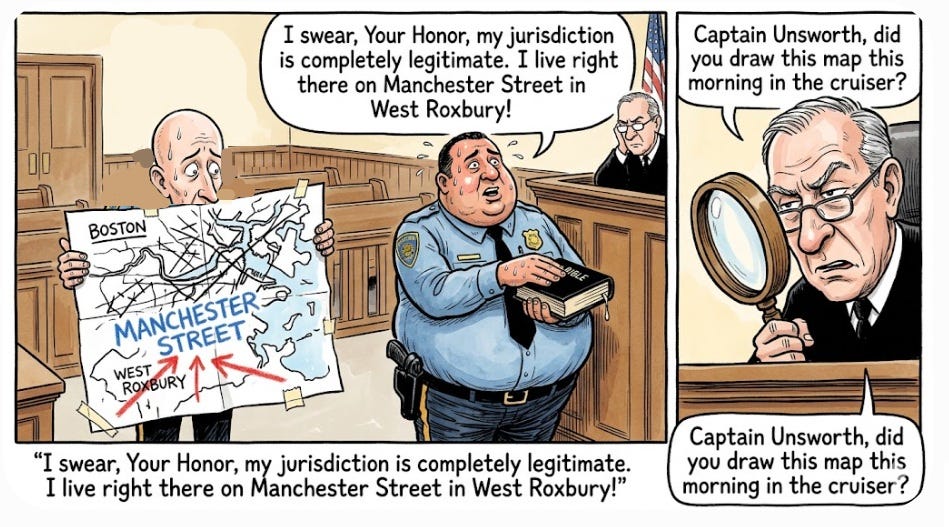
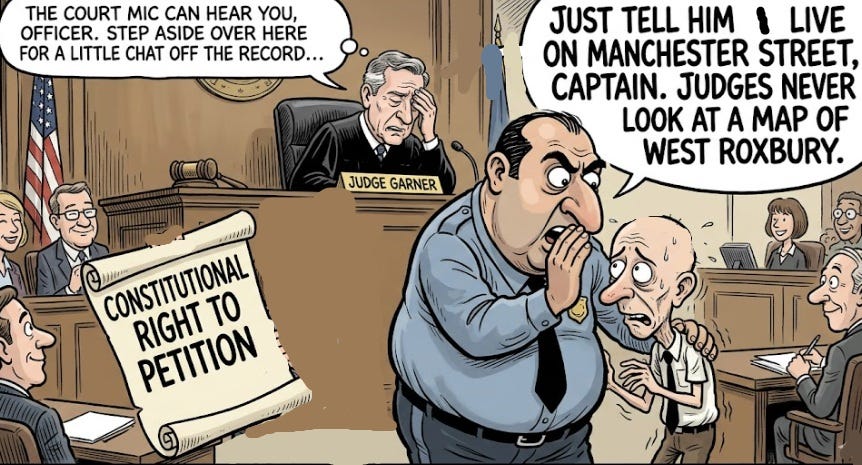
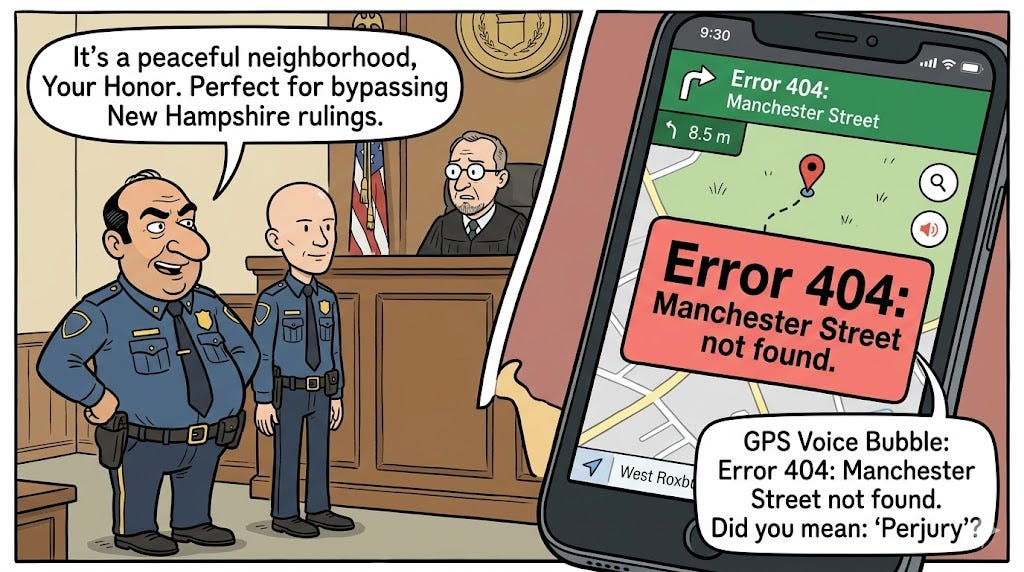
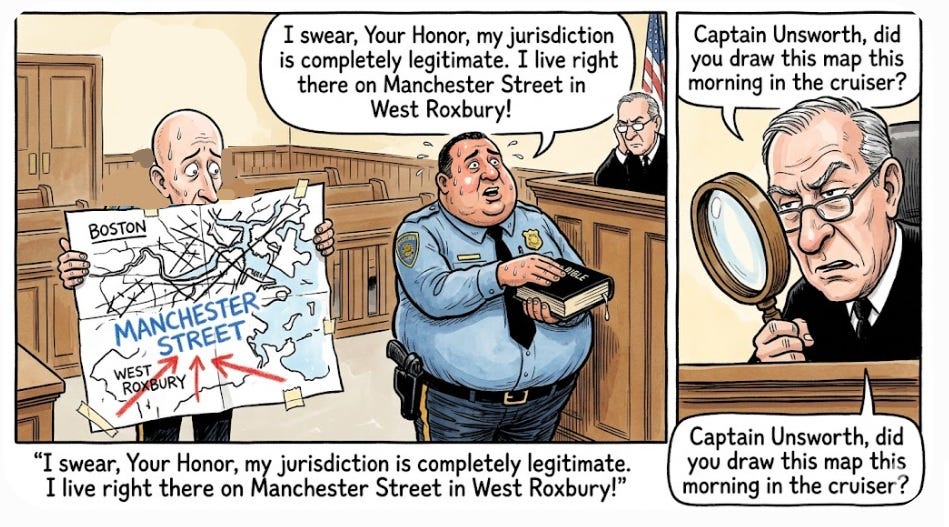
We analyze a striking moment captured in the official court transcript from the February 26 ex parte hearing. When questioned by the bench regarding his physical location, Officer Khalil Mafhoum identified his residence as being on “Manchester Street” in West Roxbury.
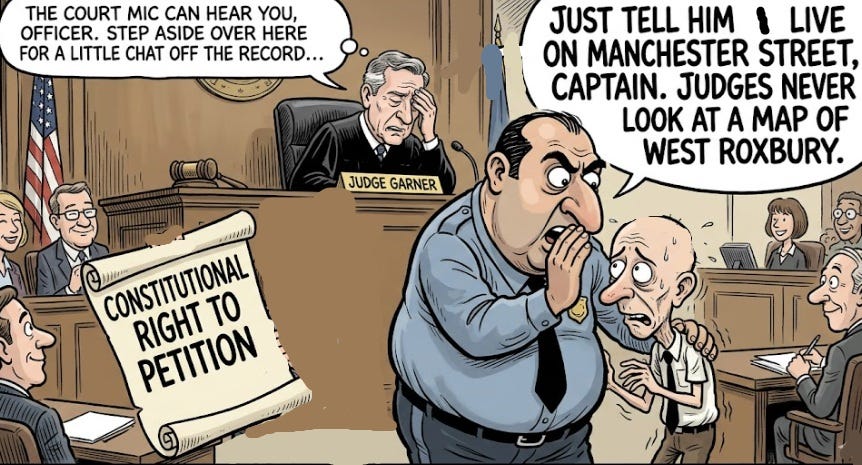
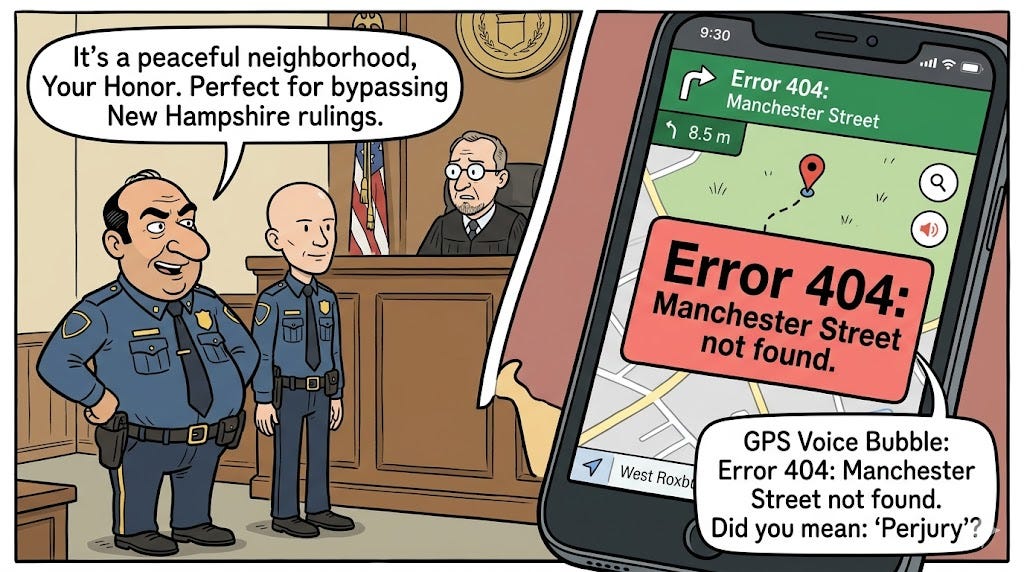
A forensic review of municipal dockets reveals a bizarre geographical truth: no such street address exists in that entire Massachusetts jurisdiction. We look at how the name of his actual, documented domicile—Manchester, New Hampshire—was seamlessly repurposed to manufacture local court jurisdiction.
The Cross-State Legal Migration
A deep dive into Civil Superior Court Case No. 656-2022-DV-00355 in Manchester, New Hampshire. Years prior, Mafhoum had brought these identical grievances before a judge in his own backyard, who swiftly dismissed the petition after ruling that a citizen indexing and distributing public records is a protected act of transparency, not criminal harassment.
We trace the tactical decision to cross state lines and seek out a “clean slate” in a sympathetic Massachusetts venue, banking on the weight of a uniformed captain to overshadow active New Hampshire judicial precedent and fresh federal mortgage filings.
The Logic of the “Invisible Fire”
To secure a temporary order under the law, a petitioner must articulate a reasonable fear of imminent physical harm. Yet, the written affidavit signed under oath bypassed physical threats entirely to catalog a list of “handwritten cards” and “emails sent during school vacation”.
We untangle the internal logical paradox of the oral testimony: Mafhoum claiming he could not disclose his address for fear the whistleblower would “burn it down,” an absolute impossibility if the target did not know the location existed.
The “One-Man Band” High Command
An examination of Captain Danny Unsworth’s starched, uniformed presence at a personal, domestic restraining order proceeding.
How the high command effectively blurred the separation of powers—acting less like a traditional peace officer and more like a creative director engineering a protective legal quarantine around a compromised personnel file.
Quotes Featured in This Episode
“By invoking a ‘Manchester Street’ that appears on no map, the petitioner effectively renounces his actual New Hampshire geography to claim a fictional West Roxbury, Massachusetts one. Mafhoum becomes, for the duration of the hearing, a man without a verifiable jurisdiction—a legal phantom seeking protection from the very records that would anchor him to the truth.”
Book Club & Discussion Questions
The Fictional Address Strategy: When a law enforcement officer testifies under oath to a residential address on a street that does not exist on any municipal map, how does that affect the structural integrity of the entire legal proceeding?
The Forum-Shopping Reality: Why does our judicial system allow individuals to clear out an unfavorable, binding ruling in one state by simply crossing lines to re-litigate the exact same facts in an out-of-district court?
The Shield of “Privacy”: In family and district court spaces, judges routinely grant “paramount privacy” to withhold a law enforcement officer’s address from the record. In this case, did that privacy serve a legitimate safety concern, or did it function as an administrative blind to keep property deeds hidden from view?
Resource Links & References
Featured Book: Watertown: Under Color of Law by Amy M. Dubé (2026, Red Oak Media).


