


Atmospheric Gaslighting: Sworn Oaths, Green Cards, and Bureaucratic Backlogs
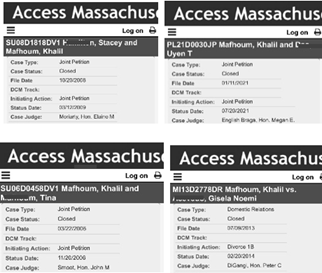
In this episode, we pull back the curtain on Chapter 6 of Watertown: Under Color of Law, titled “Marital Bliss.” This installment pivots from the highway blacktop to the paper-strewn desks of the family court system, tracking a complex, decade-long domestic blueprint. We dissect how a sequence of overlapping legal filings, quick divorces, and strategic timelines can be utilized as financial and administrative instruments—and how an unvetted personal past can seamlessly compromise public-facing authority.
Key Themes & Discussion Points
The Domestic Blueprint & Immigration Benchmarks
A forensic examination of a domestic record that reads like a high-stakes psychological thriller.
We look at the striking mathematical rhythm of four separate marriages executed across an eleven-year span (2005–2016), averaging an interval of roughly 3.6 years per union.
How these specific timelines consistently align with federal immigration benchmarks, permanent residency tracking, and swift, “uncontested” probate court filings.
The “Linguistic” and Physical Footprint Disconnect
Despite boasting fluency across six distinct languages, background inquiries revealed a total lack of a shared language or even a baseline physical footprint—such as clothes or toiletries—with a fourth spouse during critical background vetting.
We look at how the system accepted explanations of a spouse being indefinitely “out of state” while turning a blind eye to deep structural anomalies.
Atmospheric Gaslighting & Weaponized Identity
How individuals with a pattern of short-term, transactional arrangements retreat behind the image of the salt-of-the-earth immigrant when questioned.
Turning an inquiry into verifiable data points into a manufactured personal insult to the American Dream, shifting the burden of discomfort onto the observer.
The Underground Paper Economy
A blunt look at the reality of “paper marriages” within the Commonwealth, which investigators note can command significant middle-class capital subsidies.
How the backlogs of a drowning bureaucratic system allow nimble operators to clear the filter of suspicion by memorizing the minutiae of a curated household.
Quotes Featured in This Episode
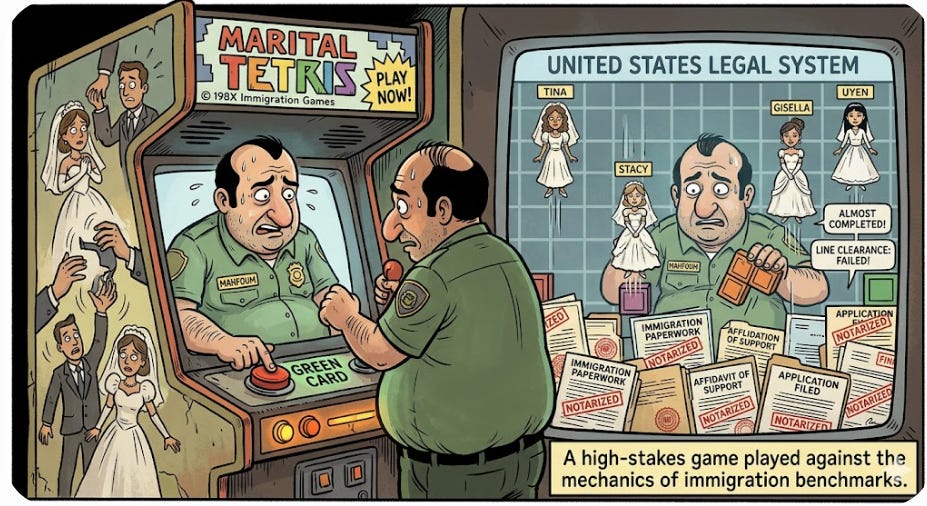
“Much like his tenure in the barracks, his track record in the ‘I Do’ department appears less as a testament to stability and more like a high-stakes game of marital Tetris played against the mechanics of the U.S. legal system.”
Book Club & Discussion Questions
The Vetting Blindspot: The Massachusetts State Police initially viewed a candidate comfortable with complex immigration paperwork as an asset who would be a “stickler for the truth.” Why do background investigators often mistake bureaucratic compliance for personal transparency?
The 3.6-Year Cycle: When an individual averages a divorce and a new marriage certificate in cycles that perfectly mirror federal permanent-residency ten-year card distributions, does it represent relationship instability or a calculated transactional ledger?
The Uncontested “Easy Button”: How does the rapid use of uncontested filings in the Massachusetts Probate Court serve as an administrative shield against judicial scrutiny?
Resource Links & References
Featured Book: Watertown: Under Color of Law by Amy M. Dubé (2026, Red Oak Media).
Related Chapters: Chapter 5 (”Officer Shuffle”) and Chapter 7 (”Vetting Failures”).


